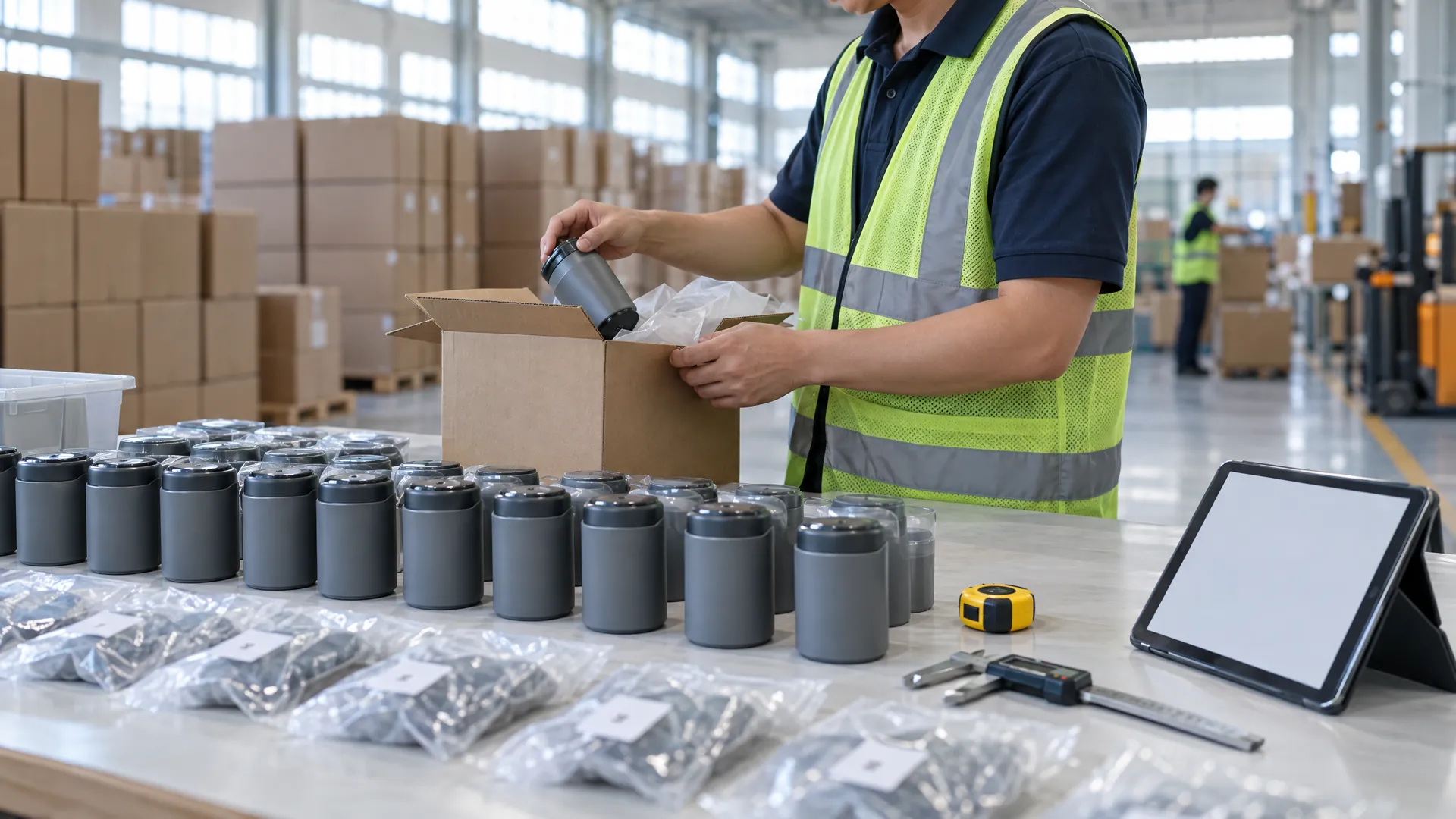
AQL Inspection Explained: Sample Size, Defect Classes and the PASS/FAIL Decision
If you import from China, sooner or later a supplier or an inspector will say: "we inspect to AQL 1.5 for major defects and 4.0 for minor." It sounds technical, but the idea is simple, and understanding it protects you from two expensive mistakes: accepting a bad shipment, or rejecting a good one.
AQL stands for Acceptable Quality Level. It is a statistical sampling method, not a promise that every single unit is perfect. The inspector does not open every carton of a 50,000-unit order. Instead, the standard tells them how many units to draw at random from the finished lot, and how many defects in that sample are still acceptable. The standard we use is ANSI/ASQ Z1.4-2008 (the successor of MIL-STD-105E).
Step 1: the sample size. It depends on the lot size and the inspection level. At General Inspection Level II with a Normal plan, the sample is 200 units for a lot of 3,201–10,000 pieces, 315 units for 10,001–35,000 pieces, 500 units for 35,001–150,000 pieces and 800 units for 150,001–500,000 pieces. A bigger lot means a bigger sample, but not proportionally bigger, which is why sampling stays affordable.
Step 2: the defect classes. Every defect found is classified. A critical defect is one that makes the product unsafe or illegal to sell, for example a sharp edge on a children's item or a missing mandatory warning. The AQL limit for critical defects is 0: a single one fails the lot. A major defect makes the product unsellable or clearly unfit for its purpose, for example a broken seal, a wrong colour or a part that does not work. A minor defect is a cosmetic or small deviation that does not affect use, for example a slight print blur or a loose thread.
Step 3: the limits. A common setting is AQL 0 for critical, 1.5 for major and 4.0 for minor defects. With a sample of 315 units, the standard allows up to 10 major defects (the lot is rejected at 11) and up to 21 minor defects (rejected at 22). These accept and reject numbers are read straight from the sampling table, so the verdict does not depend on anyone's opinion.
Step 4: the decision. If the number of defects in each class stays within its limit, the quality of the lot is PASS. If any class exceeds its limit, the lot is FAIL or put on HOLD until the factory sorts, reworks and is re-inspected.
Two things worth knowing. First, AQL checks workmanship; it is separate from packing status. A report can show the workmanship result as PASS while the overall status is still PENDING, for example because inner packing materials were not complete at the time of the visit. Production is finished, and the open items are resolved before shipment. Second, AQL is a risk tool, not a guarantee: a passed lot can still contain a small share of defects within the accepted limits. If your product has zero tolerance for something specific, say so in the inspection brief and we turn it into a dedicated check.
We publish real inspection reports, including a failed one (fuel flowmeters, 2021), so you can see what each result looks like in practice. Before every inspection we agree the AQL limits, the defect list and the reference sample with you, so there are no surprises when the report arrives within 24 hours with photos and a clear PASS, HOLD or FAIL.
Frequently asked questions
What do AQL 1.5 and 4.0 mean in an inspection?
They are limits on the acceptable number of defects: 1.5 applies to major defects and 4.0 to minor ones. Critical defects have a limit of 0. For a sample of 315 units the standard allows up to 10 major and up to 21 minor defects.
What sample size is used at AQL General Inspection Level II?
For a lot of 3,201–10,000 units the sample is 200, for 10,001–35,000 it is 315, for 35,001–150,000 it is 500 and for 150,001–500,000 it is 800 units (ANSI/ASQ Z1.4-2008, Normal plan).
What is the difference between critical, major and minor defects?
A critical defect makes the product unsafe or illegal to sell (limit 0). A major defect makes it unsellable or non-functional. A minor defect is a small cosmetic deviation that does not affect use.
Does an AQL PASS guarantee zero defects?
No. AQL is a statistical method that assesses a sample. A lot that passes can still contain a small share of defects within the accepted limits. Specific requirements should be written into the inspection brief.
Planning to import from China?
Describe your project and we will send a quote with no hidden costs. We reply within 24 business hours.
Request a Quote